
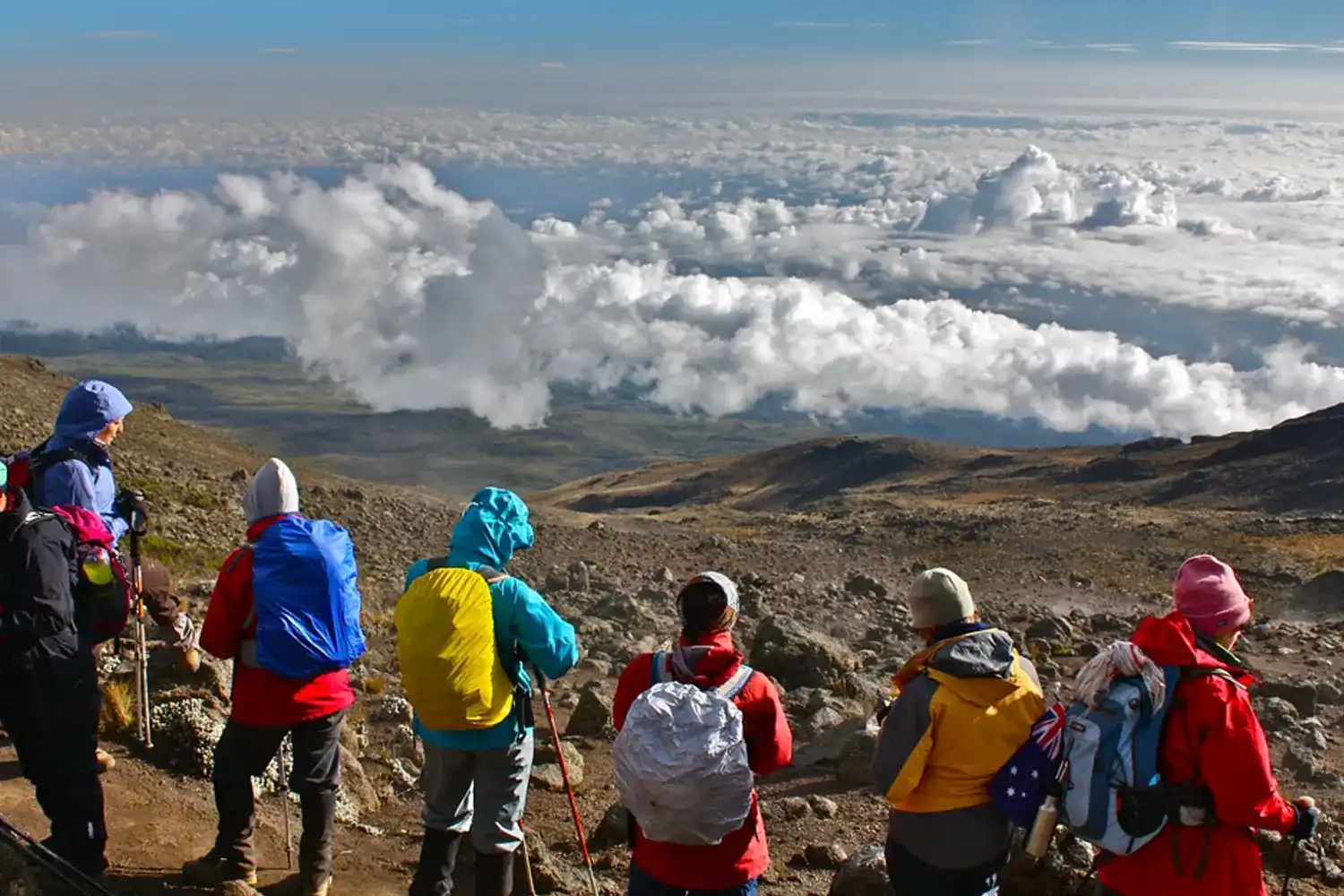
Acclimatization Is the Part You Cannot Rush
As you climb Kilimanjaro, air pressure drops and your body receives less oxygen with each breath. Acclimatization is the process of adapting to that change. It takes time. A strong hiker can still develop altitude illness, while a slower walker may acclimatize well.
That is why route choice should not be based only on distance or difficulty. The number of nights, sleeping altitudes and how quickly the itinerary moves upward all matter.
Why More Mountain Days Usually Help
Longer itineraries give the body more time to adjust before summit night. They also give the mountain team more opportunity to watch how a climber is responding from camp to camp.
This does not mean adding a day guarantees the summit. Weather, illness, sleep and individual altitude response still matter. The benefit is simply that a slower schedule gives acclimatization more room to happen.
What the Medical Guidance Says
Current CDC high-altitude guidance explains that the most important early acclimatization changes happen during the first several days at altitude. It also recommends gradual increases in sleeping altitude once above 3,000 metres.
Kilimanjaro's fixed camps and summit itineraries do not follow textbook altitude guidance perfectly. That is one reason we compare route length and camp sequence instead of calling one route “safe” or promising a particular summit percentage.
Fitness Helps You Walk, Not Acclimatize
Training is important because Kilimanjaro involves long walking days, cold conditions and a demanding summit push. Better endurance and leg strength can make those demands easier to handle.
What fitness cannot do is make you immune to altitude sickness. Very fit people can still develop acute mountain sickness. That is why symptoms should be reported honestly rather than hidden.
Common Early Symptoms at Altitude
Headache, poor sleep, reduced appetite, tiredness and nausea can occur as climbers move higher. These symptoms deserve attention because they can also be signs that the body is not adapting well.
Pulse oximeter readings can be useful information, but they should not be treated as the only decision point.
When Continuing Up Is the Wrong Decision
Worsening symptoms should not be treated as something to “push through.” Serious breathing difficulty at rest, confusion, loss of coordination or a clear decline in condition can require urgent descent and medical attention.
Summit day is optional. Safe descent is not. A guide may stop a climb even when the client wants to continue.
How the Main Routes Compare for Acclimatization
Lemosho
Often chosen by travelers who can give the mountain more days. Longer versions spread the ascent over more nights before summit day.
Machame
The seven-day option gives more acclimatization time than the shorter six-day version and includes the Lava Tower to Barranco pattern.
Marangu
The six-day version is generally preferable to the five-day version because of the extra acclimatization day around Horombo.
Rongai
The early profile can feel gradual, but altitude still becomes the main issue higher on the mountain. More days remain useful.
“Climb High, Sleep Low” on Kilimanjaro
This means spending part of the day at a higher altitude before descending to a lower sleeping camp. On Machame and Lemosho, the Lava Tower day is the best-known example.
The idea is not to exhaust the body. It is to experience a higher altitude without immediately sleeping there.
Do Not Choose a Route by Summit Percentage
Many websites publish route success rates such as 90%, 95% or 98%. Those numbers are hard to compare unless the operator explains the sample size, time period, route duration, definition of success and who was included.
Published Kilimanjaro research confirms that altitude illness is a real issue, especially on compressed ascent profiles. It does not support treating a marketing percentage as a guaranteed outcome.
What We Look at Before Recommending a Route
- How many total days you have in Tanzania
- Your previous trekking experience
- Any previous exposure to high altitude
- Whether you prefer tents or huts
- Your comfort with longer mountain itineraries
- Your travel schedule before and after the climb
- Whether you are combining Kilimanjaro with safari or Zanzibar
If the schedule is too tight, it is better to address that before booking than to shorten the mountain simply to fit a flight.
Before the Climb
Arriving rested helps, but it does not replace acclimatization. Use the day before departure to check equipment, eat normally, sleep and discuss the route with the mountain team.
If you have a medical condition or questions about altitude medication, speak with a qualified clinician before travel.
Hydration, Food and Pace
Drink regularly and eat even when appetite drops, but do not treat water as a cure for altitude sickness. Overhydration can also be harmful.
The usual trail pace is deliberately slow. That is not a sign the group is weak. Moving steadily reduces unnecessary effort and makes long days easier to manage.
Acetazolamide and Other Medication
Acetazolamide is commonly discussed for high-altitude travel, but medication decisions should be made with a qualified medical professional who knows your health history.
Medication does not make an aggressive itinerary risk-free, and it does not replace honest symptom reporting or descent when a serious problem develops.
Frequently Asked Questions
Is seven days better than six for acclimatization?
In general, an extra mountain day gives the body more time to adapt. The exact benefit depends on the route and where that day is placed.
Can very fit people still get altitude sickness?
Yes. Fitness helps with walking but does not reliably predict who will develop altitude illness.
Does sleeping in Moshi acclimatize me for Kilimanjaro?
It helps you recover from travel, but Moshi is far below the altitudes where most Kilimanjaro acclimatization happens.
Can a guide stop me from continuing?
Yes. If the guide believes continuing is unsafe, descent or stopping the climb may be necessary.
Is summit success guaranteed on a longer route?
No. A longer itinerary can improve acclimatization opportunity, but no responsible operator can guarantee a summit.