
Kilimanjaro Climbing Guide – Routes, Training, Gear & Safety
Planning Kilimanjaro is easier when you separate the big decisions: which route to use, how many mountain days to allow, how to prepare for altitude, what equipment to bring, and what summit night is really like. This guide brings those topics together and links you to the detailed articles when you need more depth.
Explore Kilimanjaro GuidesStart With the Right Kilimanjaro Question
- Choosing a route? Compare duration, sleeping style, trail character and acclimatization profile.
- Worried about altitude? Read the acclimatization and safety guides before choosing a short itinerary.
- Not sure how to train? Build hiking endurance and leg strength for repeated walking days.
- Sorting equipment? Use the packing and gear guides before renting or buying anything.
- Planning flights? Leave enough time before and after the mountain rather than forcing the climb into a tight schedule.
Kilimanjaro Planning Guides by Topic
You do not need to read every Kilimanjaro article before booking. Start with the topic that affects your decision now, then use the related guide for the details.
Routes, Duration & Itineraries
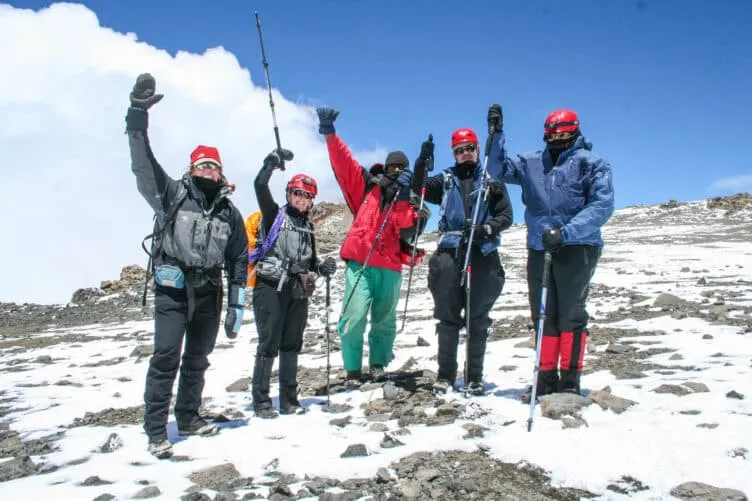
Compare Machame, Lemosho, Marangu, Rongai, Umbwe and the Northern Circuit by number of days, accommodation style, trail character and acclimatization opportunity.
Explore Route Guides →
Acclimatization & Altitude
Understand why mountain days matter, what altitude symptoms can mean and why fitness alone does not protect a climber from altitude illness.
Read Acclimatization Guide →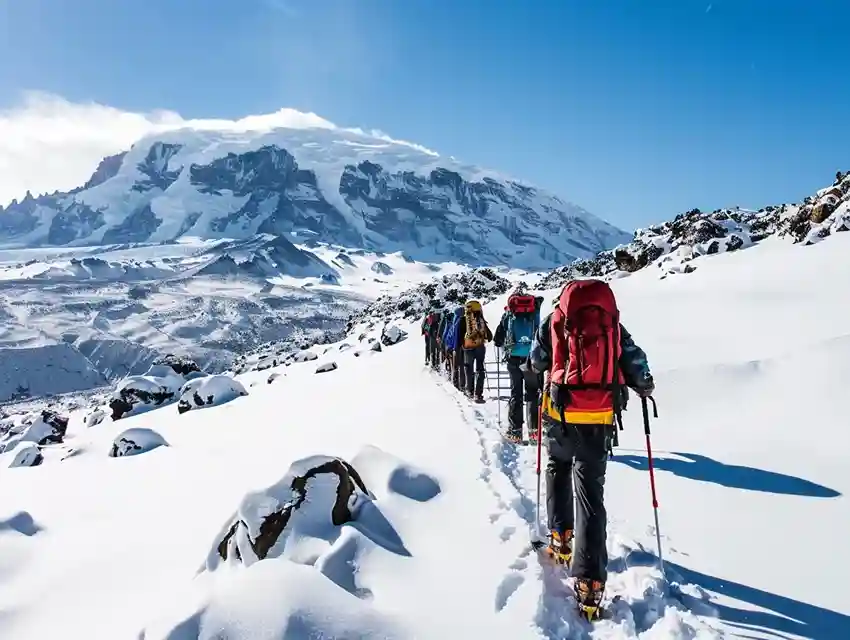
Gear & Packing
Plan clothing, footwear, sleeping gear, daypack items and summit-night layers before deciding what to buy, bring or rent locally.
View Packing Guides →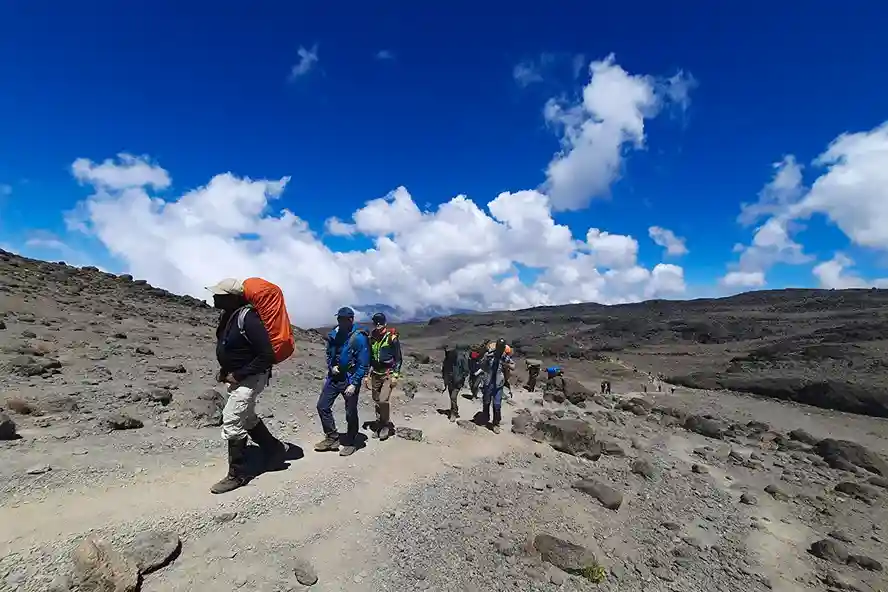
Training & Fitness
Prepare for repeated walking days, long descents and summit night with consistent hiking, strength and endurance work rather than last-minute training.
Read Training Guide →
Safety & Health
Learn the practical risks of high altitude, cold, fatigue and changing weather, and understand why symptom reporting and guide decisions matter.
Explore Safety Guides →
Summit Night
Know what changes on the final ascent: night-time start, colder conditions, slower pace, thinner air and a long descent after the summit attempt.
Read Summit Night Guide →Where Is Mount Kilimanjaro?
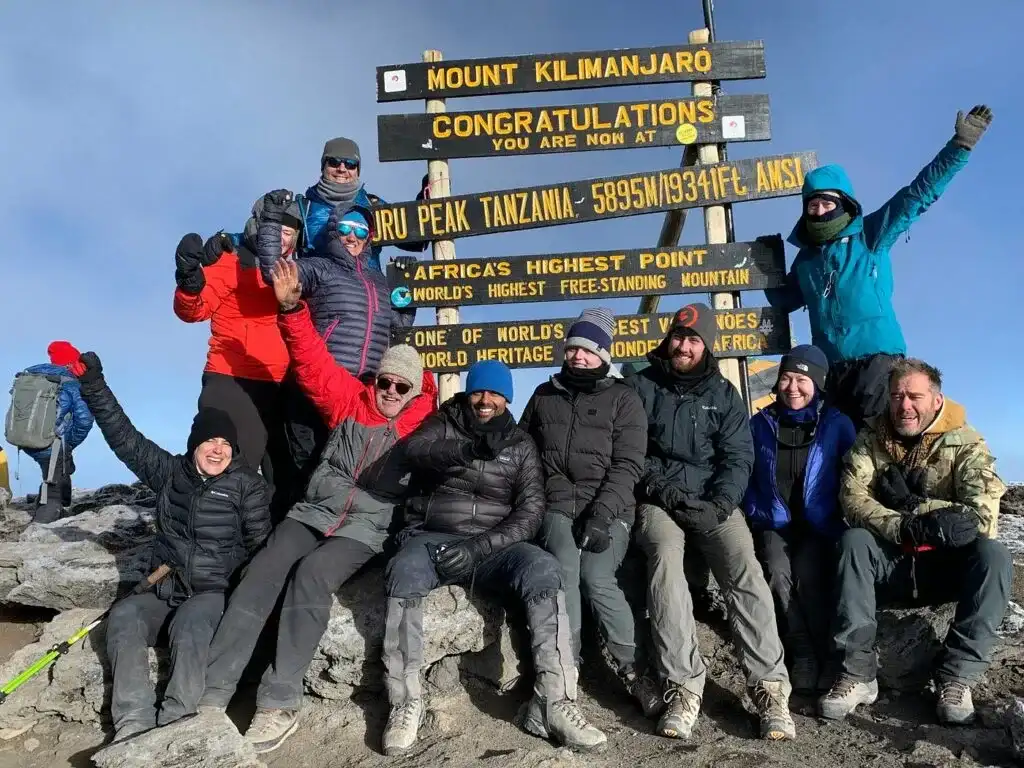
Mount Kilimanjaro is in northern Tanzania, close to Moshi and south of the Kenya border. Uhuru Peak, the highest point on Kibo, reaches 5,895 metres above sea level.
Most international climbers arrive through Kilimanjaro International Airport and spend at least one night in Moshi or Arusha before the trek. The hotel night is useful for rest, equipment checks and the pre-climb briefing, but it does not replace acclimatization on the mountain.
How to Choose a Kilimanjaro Route
Do not choose only by the route nickname or by the cheapest package. The more useful comparison is how many mountain days you actually get, where you sleep, whether you prefer huts or tents, how busy the trail can be, and how much time your overall Tanzania schedule allows.
- Machame: camping route with varied southern scenery; often chosen in six- or seven-day versions.
- Lemosho: western approach with longer itinerary options and a quieter beginning before joining the southern circuit.
- Marangu: the main hut route; useful for travelers who do not want tent accommodation.
- Rongai: approaches from the north and is quieter during the early stages.
- Northern Circuit: long camping itinerary that continues around Kibo's northern side before the summit approach.
- Umbwe: steeper and more direct in its early stages; generally chosen by trekkers who understand the compressed profile.
Longer does not mean easy, and shorter does not automatically mean bad. What matters is whether the camp sequence gives you a sensible climb for the time available.
Acclimatization Matters More Than Fitness Claims
Kilimanjaro is a high-altitude trek. You can train your legs and lungs for the walking, but you cannot guarantee how your body will respond to altitude. That is why route length and symptom monitoring matter.
A slower itinerary gives more time for adaptation before summit night. It still does not remove the risk of acute mountain sickness or more serious altitude illness.
If a climber develops worsening headache, nausea, unusual weakness, loss of coordination, confusion or breathing difficulty, the correct response is not to hide the symptoms just to protect a summit attempt. The guide needs accurate information to make a safe decision.
How Much Does a Kilimanjaro Climb Cost?
There is no reliable single price for every Kilimanjaro climb. The final amount changes with the route, number of mountain days, group size, hotel nights, private or shared service, equipment rental and what is included in the written package.
When comparing two quotations, look beyond the headline price. Check the exact number of park days, guide and crew services, meals, tents or huts, transfers, hotel nights, rescue-related park fees and any rental equipment.
An unusually cheap package is not automatically a bargain if important services have been removed from the quote.
When Is a Good Time to Climb?
Many climbers target the drier parts of the year because trail conditions and visibility can be easier to manage. January to early March and roughly June to October are commonly chosen periods.
That does not mean the mountain becomes predictable. Kilimanjaro creates its own weather, and rain, wind, cloud, snow or cold can occur even during popular climbing months. A packing list still needs to cover wet and freezing conditions.
Training for Kilimanjaro
Training should make repeated walking days feel familiar. You do not need to train like a runner unless running is already part of your routine.
- Walk or hike consistently for several weeks or months before travel.
- Build longer weekend hikes gradually.
- Use hills or stairs to prepare the legs for ascent and descent.
- Practice with the boots and daypack you will use on the mountain.
- Add basic leg and core strength work.
- Give yourself recovery days so training does not create an injury before departure.
A good training plan improves hiking capacity. It does not guarantee acclimatization.
Kilimanjaro Packing: What Matters Most
Kilimanjaro crosses very different environments in a short vertical distance. That is why layering matters more than one very heavy item.
- Broken-in hiking boots
- Moisture-managing base layers
- Warm mid-layer
- Insulated summit jacket
- Waterproof jacket and trousers
- Warm gloves and hat
- Sun hat, sunglasses and sunscreen
- Headlamp with spare batteries
- Trekking poles if you use them
- Sleeping bag suitable for cold mountain nights
- Daypack and soft duffel within the operator's baggage rules
Rentals may be available locally, but sizes and stock should be confirmed before the climb rather than assumed.
What Happens on Summit Night?
Summit night normally starts late at night or around midnight from a high camp. Climbers move slowly in the dark toward the crater rim before continuing toward Uhuru Peak if conditions and health allow.
It is often the hardest part of the trip because the air is thin, temperatures are low and the walking day continues long after sunrise. Reaching the summit is only half of the work; you still need to descend safely to a lower camp.
The guide may turn a climber around before the summit if continuing is unsafe. That decision is part of responsible mountain guiding, not a failed service.
How to Read Summit-Success Claims
You will see many Kilimanjaro websites publishing route success percentages. Those figures are difficult to compare unless the company explains the dates, sample size, route duration, whether every starting climber was counted and what they define as a successful summit.
For that reason, this guide does not give a universal percentage for Machame, Lemosho, Northern Circuit or any other route. The more useful questions are how many mountain days the itinerary contains, how the sleeping altitude changes and how the guide team manages symptoms and decisions.
Safety on Kilimanjaro
Kilimanjaro is non-technical on the standard trekking routes, but that does not make it risk-free. Altitude is the main concern, followed by cold, fatigue, dehydration, slips, changing weather and pre-existing medical issues.
Before booking, ask what health checks are used on the mountain, what emergency equipment the team carries, how evacuation decisions are made and what happens if a climber needs to descend separately from the group.
Medical questions, including whether a particular medication is appropriate for you, belong with a qualified clinician who knows your health history.
Planning With Capable Africa Tours
Capable Africa Tours arranges Kilimanjaro climbs from Tanzania and can help you compare the standard routes, mountain days and local logistics before you book.
A typical discussion starts with your travel dates, number of climbers, preferred route or accommodation style, and whether the climb is being combined with safari or Zanzibar. From there, the final quotation should state the exact itinerary and services rather than rely on generic package promises.
Need Help Choosing a Kilimanjaro Route?
Send us your dates, number of climbers and how many mountain days you can allow. We can compare the routes around your actual schedule instead of forcing every traveler into the same itinerary.
Ask About Kilimanjaro