
Emergency Procedures on Kilimanjaro 2026/2027: What Guides Do
Kilimanjaro emergency response begins with early symptom reporting and a guide’s decision to stop ascent when necessary. The first priority for serious altitude illness is descent to a safer elevation, supported by oxygen or other emergency equipment when appropriate. Depending on location and condition, the team may walk a climber down, use a mountain stretcher, contact park rescue or transfer the guest from the gate to medical care.
Plan Your Safe Kilimanjaro Trek Now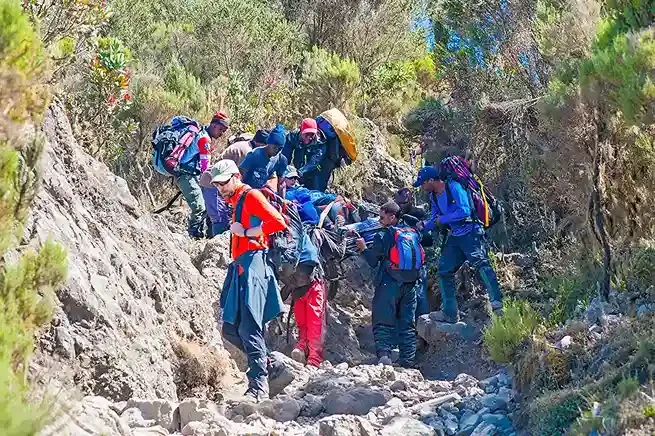
Why Early Reporting and Fast Descent Save Time in an Emergency
Emergency preparedness is critical for Kilimanjaro because the mountain’s extreme altitude, unpredictable weather, and remote setting can quickly turn minor issues into life-threatening situations. Being prepared with the right knowledge, gear, and support ensures you can handle challenges like altitude sickness, sudden storms, or injuries safely—and gives you the confidence to focus on the climb itself. Capable Africa Tours prioritizes safety with trained guides, comprehensive first aid kits, and evacuation plans. This guide details key emergency procedures to ensure you’re ready for a safe 6–9 day trek.
Common Emergencies on Kilimanjaro
| Emergency Type | Symptoms | Response | Frequency (% of Climbers) |
|---|---|---|---|
| Acute Mountain Sickness (AMS) | Headache, nausea, dizziness | Rest, hydrate, oxygen, descent if severe | 50–75% |
| High Altitude Pulmonary Edema (HAPE) | Shortness of breath, coughing | Oxygen, immediate descent, medical attention | 1–2% |
| High Altitude Cerebral Edema (HACE) | Confusion, loss of coordination | Immediate descent, oxygen, medical evacuation | 0.5–1% |
| Minor Injuries | Sprains, blisters, cuts | First aid, stabilization, possible evacuation | 10–15% |
| Hypothermia | Shivering, confusion, fatigue | Warm layers, hot drinks, shelter, descent | 2–5% |
Emergency Procedures Checklist
- Monitor Symptoms: Regularly check for signs of altitude sickness using pulse oximeters (carried by Capable Africa Tours’ guides).
- Communicate: Report any discomfort to your guide immediately for early intervention.
- Hydrate and Rest: Drink 3–4 liters of water daily and follow the “pole pole” (slowly) pace to aid acclimatization.
- Use Oxygen: Supplemental oxygen is available for severe AMS cases to stabilize climbers.
- Prepare for Evacuation: Know your route’s evacuation points (e.g., ranger posts on Marangu or Machame routes).
- Carry Medications: Bring Diamox (consult a doctor) and inform guides of all medications.
- Weather Preparedness: Wear waterproof Gore-Tex layers and carry emergency blankets for sudden weather changes.
The Guide, Equipment and Communication Systems Behind a Safe Climb
At Capable Africa Tours, safety is our top priority. Our guides are trained in wilderness first aid and high-altitude medicine, carrying essential equipment like pulse oximeters, oxygen cylinders, and satellite phones. We use longer routes like Lemosho or Machame for better acclimatization, reducing emergency risks. Here’s how we prepare for and manage emergencies on Kilimanjaro.
Safety Protocols
- Daily Health Checks: Guides monitor oxygen levels and symptoms twice daily.
- Emergency Equipment: First aid kits, oxygen, and communication devices are standard on all treks.
- Guide Training: All guides are certified in wilderness first response and high-altitude rescue.
- Evacuation Plans: Pre-planned routes and coordination with park rangers ensure swift evacuations.
- Client Briefings: Pre-trek safety talks cover emergency procedures and acclimatization tips.
Use Safety Videos to Prepare Questions—not Replace a Briefing
Learn how Capable Africa Tours prepares you for emergencies on Kilimanjaro with this informative video on safety protocols and emergency procedures.
What Climbers Should Do Before and During an Emergency
Stay calm and act quickly if an emergency arises on Kilimanjaro. Always communicate any unusual symptoms, especially those linked to altitude sickness, to your guide right away. Carry a basic first aid kit with essentials like blister care, pain relievers, and personal medications. Know the importance of descending immediately if severe altitude issues occur, and trust your guides—they are trained in rescue procedures and first response. Below are the top emergency preparedness tips every climber should know to stay safe during a 6–9 day trek with Capable Africa Tours.
- Know the Symptoms: Learn signs of AMS, HAPE, and HACE before your climb. Early detection saves lives.
- Stay Hydrated: Drink regularly, monitor urine and appetite, and avoid forcing excessive fluid as a substitute for acclimatisation.
- Follow Guide Instructions: Trust your guide’s expertise for pacing, rest, and emergency response.
- Pack Smart: Carry a personal first aid kit with bandages, pain relievers, and anti-diarrhea medication.
- Use Proper Gear: Wear layered clothing and sturdy boots to prevent hypothermia and injuries.
- Choose the Right Route: A longer itinerary can provide a more gradual ascent, but it cannot remove altitude risk.
- Insure Your Trip: Purchase travel insurance covering high-altitude trekking and medical evacuations.
Compare Kilimanjaro Operators by Their Emergency Plan
Join Capable Africa Tours for a secure Kilimanjaro adventure. Our expert guides, robust safety protocols, and comprehensive emergency plans ensure you’re protected every step of the way.
- safety-focused route planning with trained guides
- Daily health monitoring with pulse oximeters
- Emergency oxygen and first aid kits included
- Customizable routes for optimal acclimatization
- All-inclusive packages with meals and transfers
Limited spots available for safe Kilimanjaro treks — book now to secure your adventure!
Plan Your Trek NowExplore Our Kilimanjaro Climbing Adventures
5-Day Marangu Route Kilimanjaro Climb | Hut-Based Trekking
Climb Kilimanjaro safely on the “Coca-Cola” route with Capable Africa Tours. Enjoy huts and expert safety protocols.
View Package →
6-Day Marangu Route Kilimanjaro Climb | Best for First-Time Trekkers
Join Capable Africa Tours for a safe, scenic climb with an extra acclimatization day, perfect for beginners.
View Package →
6-Day Machame Route Kilimanjaro Trek | Challenging & Popular Path
Tackle the “Whiskey Route” with Capable Africa Tours’ safety-focused guides and stunning landscapes.
View Package →