
Quick answer: where are the five nights spent?
The six-day sample route has one night around Tarangire or Karatu, three nights in Serengeti and one around the Ngorongoro highlands, followed by a crater visit and return to Arusha. The arrival night before the safari is not counted in these six days.
At a glance
| Planning detail | What to know |
|---|---|
| Duration | 6 days / 5 camping nights |
| Overnights | 1 near Tarangire/Karatu, 3 Serengeti, 1 Ngorongoro |
| Activities | Game drives and crater visit |
| Start and finish | Arusha |
First, count the nights—not just the days
This six-day camping plan gives you three nights in Serengeti , one around Tarangire or Karatu and one around the Ngorongoro highlands. To make that work, the safari departs Arusha on Day 1. An airport arrival night, if needed, is arranged separately. If you arrive in Tanzania on the same date, the first hotel night must be planned separately.
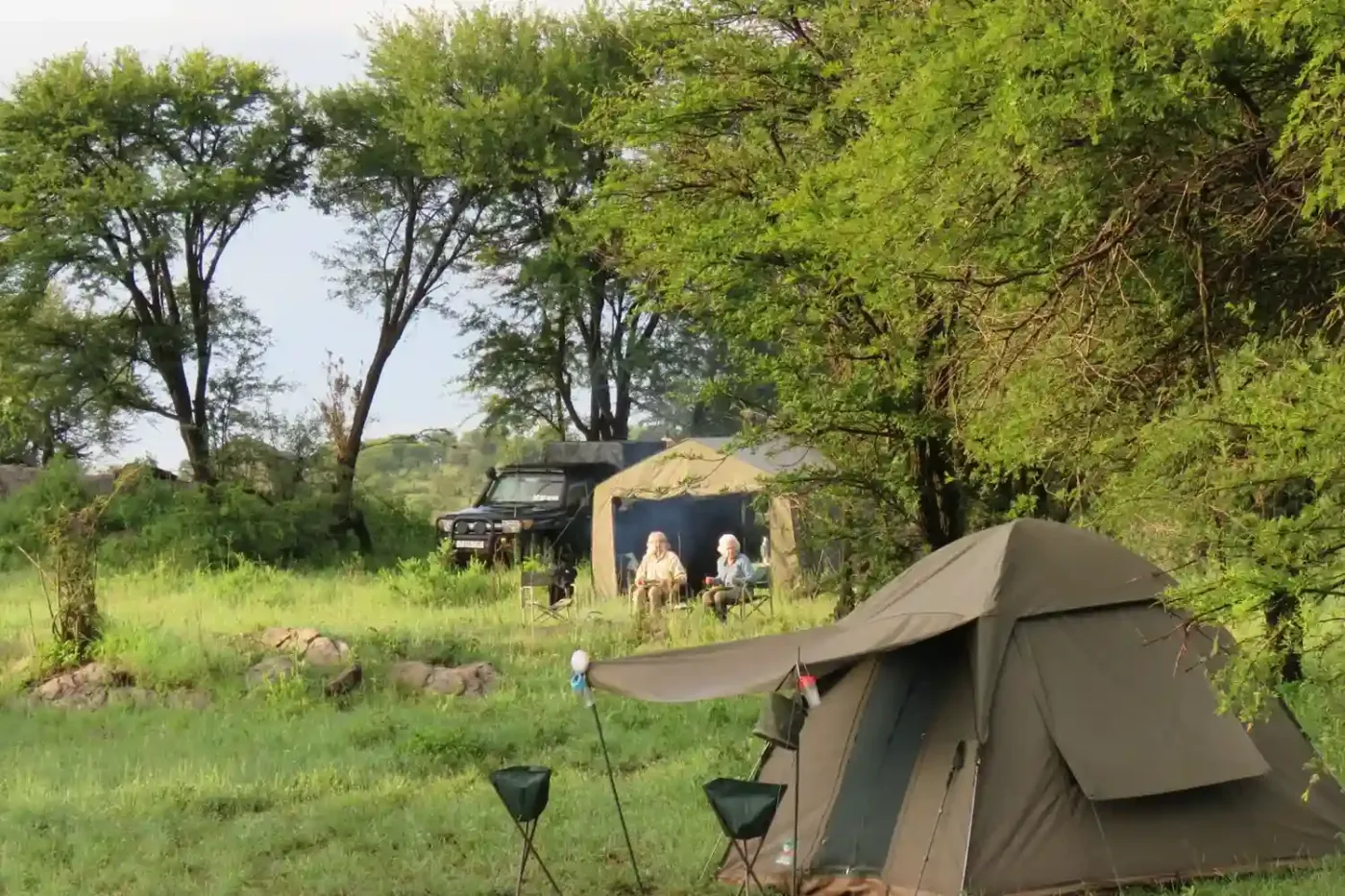
Camping can bring you close to safari landscapes, but it is not an outdoor luxury lodge. Public campsite facilities vary, mornings can be cold and you must follow crew instructions around wildlife.
Day 1: Arusha to Tarangire National Park
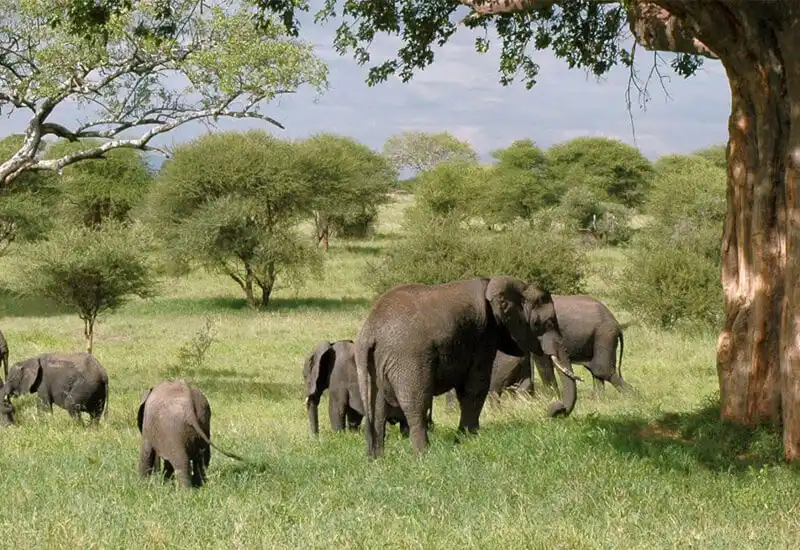
Start early from Arusha. Drive to Tarangire and spend the available day viewing elephants, birds, baobab scenery and other wildlife. Camp at a confirmed public campsite or nearby permitted camping facility according to your offer. A cook and guide may support the safari depending on the agreed camping operation.
Day 2: Travel to Serengeti and first camp night
Leave the Tarangire or Karatu area and continue through the Ngorongoro highlands toward Serengeti. Park entry formalities and road conditions can change arrival time. Once within the wildlife area, the drive becomes part of the experience. Overnight at your first booked Serengeti campsite.
Day 3: Full day in Central Serengeti
Leave camp early for wildlife viewing in the cooler hours. The guide may visit open plains, rocky kopjes or wooded river lines depending on recent sightings. Pack a picnic lunch if the plan is to stay out. Return to the same camp for a second Serengeti night.
Day 4: Another Serengeti game-drive day
Spend a second full day exploring the selected Serengeti region. This extra day is valuable for patient wildlife viewing and reduces pressure to race between distant areas. Predators, herbivores and seasonal herds are all possible, not guaranteed. Return for the third Serengeti overnight.
Day 5: Serengeti to Ngorongoro highlands
Pack camp and begin the journey out of Serengeti. Use the morning for a final drive as time permits, then continue toward the Ngorongoro Conservation Area. Overnight at the booked campsite, where temperatures may be cooler than on the plains.
Day 6: Ngorongoro Crater and return to Arusha
Descend to the crater floor early subject to park operating hours and the agreed permit. Spend the available time viewing wildlife and varied habitats, then begin the road journey back to Arusha. Do not plan a tight same-evening international departure without confirming transfer margins.
What is a Tanzania camping safari actually like?
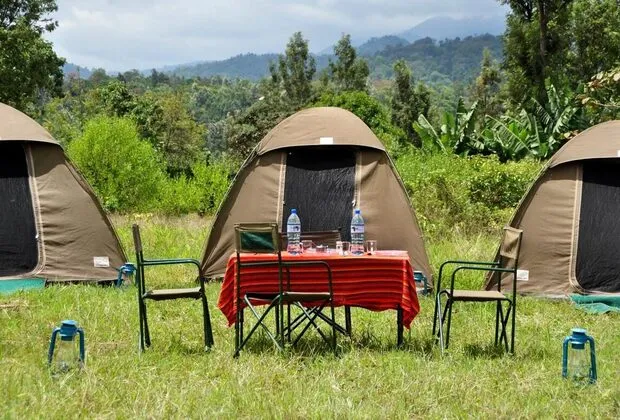
Expect a tent, basic sleeping arrangements, shared or designated bathroom facilities and simple daily routines. Your package should list the tent, sleeping mattress, sleeping bag or bedding and who is responsible for setting up camp. Facilities may be simpler than at a permanent tented lodge.
Serengeti and Ngorongoro camps can be cold after dark. Wildlife may move near designated camping areas; never walk away from camp after dark without following the guide’s instructions.
Meals, water and crew
Camping safaris often use a safari cook or camp crew, but the exact staffing arrangement varies. Breakfast and dinner are prepared at or near camp; lunch is often packed for full game-drive days. Tell the team about allergies before departure so food can be purchased and prepared appropriately.
Confirm drinking-water provision, who carries and prepares camping gear, and whether the vehicle has charging points.
Cost: what makes camping affordable?
Camping can reduce accommodation cost relative to comparable lodge safaris, but national park fees, the vehicle, fuel, guide, cook and transfer distances remain significant expenses. A shared departure may reduce per-person vehicle costs. Special campsites and upgraded equipment may add charges.
Prices should be quoted against your date, group size and chosen campsite standard—not presented as a fixed universal tariff.
What to check before booking
- Confirmed campsite names and whether sites are public or special
- Number of Serengeti nights—three in the itinerary above
- Sleeping bags, mattresses, toilets and shower facilities
- Safari vehicle, guide and cook/crew arrangement
- Park fees, meals, drinking water and pickup details
- Any extras such as cultural stops or balloon flights
- Cancellation and payment conditions
Other choices for longer or more comfortable travel
Compare the 10-day Tanzania camping safari, Tanzania camping safari packages, private safari packages, Serengeti tours and Northern Tanzania safaris.
The evening routine at a public campsite
A camping day does not end when the vehicle reaches camp. The team may need to pitch tents, arrange water and prepare dinner. In some locations showers are shared, charging is limited and nights are chilly. Follow staff instructions about where you may walk after dark, especially if wildlife is nearby.
Ask whether bedding, sleeping bags, pillows, a cook and drinking water are supplied. A public campsite and a special campsite are not interchangeable products.
Who should consider a lodge upgrade?
If you need a private bathroom, uninterrupted electricity or a quiet indoor sleeping space, a mixed lodge-and-camp safari may fit better. You can keep the same national park route while upgrading selected overnights; the cost difference and any additional transfers should be explained before booking.
What the safari quotation includes and excludes
These are the services to look for when comparing this type of trip. They are not a promise that every departure has identical inclusions. Your dated, written itinerary and invoice determine what is booked.
Included when confirmed in writing
- Six-day safari vehicle and guide as agreed
- Five campsite nights as listed
- Park and crater fees where included in writing
- Camping equipment, cook and meals only as itemised
Usually separate unless quoted
- Arrival accommodation before Day 1
- Sleeping bag or gear not specifically provided
- Visa, international flights, insurance, tips and extras
Before paying a deposit, make sure the offer names the accommodation and room type, meals, transport and guiding basis, and all park fees relevant to the route.
Questions visitors ask about this safari
Does this include three Serengeti nights?
The sample route does. Day 2, Day 3 and Day 4 are Serengeti overnights; check the final itinerary for any seasonal changes.
Is arrival day counted in the six days?
No. The route assumes you are ready to depart Arusha on Day 1. An arrival night can be arranged separately.
Are toilets and showers available?
Facilities vary among public and special campsites; check the named site and its current amenities.
Can a family do this camping safari?
Yes, when the party is comfortable with camping and the chosen camp facilities. Discuss ages and sleeping arrangements early.
Can I bring my own sleeping bag?
Often yes, but first check the equipment already included and luggage capacity.
Share your travel dates, starting point, number of travellers and accommodation preference. We will confirm the route, available stays, activities and detailed price before any booking is final.