
Can You See All the Big Five in Seven Days?
The term “Big Five” originally came from hunting history. Today many guests use it simply as a way to describe five iconic African animals. Good guiding is about behavior, habitat and patience—not driving past everything else in pursuit of a tally.
A well-paced Northern Circuit route gives enough time to spend full days in Serengeti, return to promising predator areas and visit the crater without attempting every park in Tanzania. We recommend choosing the camps after we know your travel month and group priorities.
Where to Look for the Big Five
| Animal | Useful safari habitat | Expectation |
|---|---|---|
| Lion | Serengeti, Ngorongoro, sometimes Tarangire | Often found in grassland and woodland-edge areas; sightings change day to day |
| Leopard | Serengeti riverine woodland and suitable tree cover | Solitary and secretive; locating one may take patience |
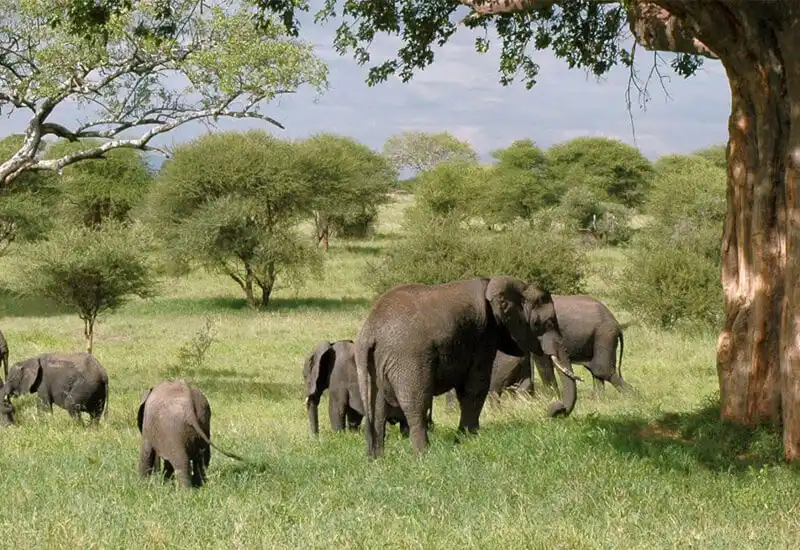
| African elephant | Tarangire, Serengeti, Ngorongoro | Family herds and bulls; keep a respectful distance |
| African buffalo | Ngorongoro, Serengeti, Tarangire | Often seen in grazing herds or near water |
| Black rhino | Ngorongoro Crater offers an important opportunity | Scarce and sensitive; sightings are never assured |
A Practical Seven-Day Itinerary
This is a planning example, not a promise that every day runs to the same clock. Your lodge locations, park-entry arrangements, weather and the confirmed route determine the final schedule.
Day 1 — Tarangire: elephants, buffalo and baobab country
Leave Arusha for Tarangire and begin in elephant country. Watch for herds moving between woodland and open areas, and give the guide time to observe without pressing close. Buffalo, giraffe, zebra and antelope add to the day. Overnight is near Tarangire or the Manyara/Karatu corridor as confirmed.
Day 2 — Lake Manyara or a longer Tarangire visit
Use this day to balance the route, not to force another Big Five claim. Lake Manyara brings groundwater forest, Rift Valley scenery and additional wildlife habitats. Alternatively, keep a second morning in Tarangire for elephants and river ecosystems. Continue to the Karatu area for the night.
Day 3 — Ngorongoro highlands to Serengeti
Travel across the highlands toward Serengeti with stops permitted by the route and gate timetable. Begin looking for lions and larger grazing herds once inside the park. Leopard sightings cannot be scheduled; guides read woodland cover and recent activity instead. Arrive at camp in time to settle in.
Day 4 — Serengeti: lions and predator territories
Spend a full day on Serengeti game drives. Open plains and kopjes can suit lion viewing, while leopard habitat may be concentrated around trees and drainage areas. A good sighting often deserves time: watch the animals rest, move and interact instead of immediately leaving for the next report.
Day 5 — A second Serengeti day for patient wildlife viewing
Return early to a productive area from the day before or explore another suitable sector. Wildlife does not follow an itinerary, so the guide adapts to weather, sightings and your interests. This extra Serengeti day gives you a better chance to see natural behavior; it is not a promise of a particular predator.
Day 6 — Serengeti to Ngorongoro: a change of landscape
After breakfast and a final practical game drive, travel to the Ngorongoro area. Allow enough time for the transfer; it is not an additional full day in Serengeti. Stay in or near the highlands so the next morning’s crater visit can begin without a very long approach.
Day 7 — Ngorongoro Crater and Arusha return
Descend into the crater after the required entry formalities. The grassland, wetlands and woodland support a variety of wildlife, including the possibility of black rhino. Even experienced guides cannot promise a rhino appearance. After the crater drive, travel toward Arusha with a sensible buffer before any onward flight.
Why the Black Rhino Needs Special Expectations
Black rhino are the least predictable of the Big Five on a typical northern Tanzania itinerary. A distant rhino view can still be meaningful, and it is not appropriate to pressure a guide to leave permitted tracks or approach too closely. The animal’s welfare and park rules come before photographs.
If a rhino is central to your dream safari, tell us in advance. We can prioritize a well-timed crater day and explain what is realistic, but no company can sell a guaranteed five-species encounter.
The Value of Two Serengeti Days
A single afternoon often produces exciting wildlife, but two full days let the guide work with what actually happens. Lions may spend long hours resting. A leopard could remain out of sight in a tree canopy. By staying in one area longer, you avoid treating the Serengeti as only a road between accommodations.
Camp position matters. A well-located mid-range camp can offer more meaningful game-drive time than a premium property far from the habitats you intend to explore.
What About the Great Migration?
Big Five viewing and migration viewing are related but not identical goals. Wildebeest herd concentrations shift with rain and grazing. Your seven-day tour can be adjusted toward a seasonal Serengeti area, but that may increase transfer time or call for a different camp. River crossings cannot be promised on a specific day.
If the migration matters more to you than the Big Five list, compare a seven-day migration-oriented route before booking.
Choosing the Season
| Season | What may work well | Planning point |
|---|---|---|
| June to October | Vegetation is often shorter in many areas and wildlife may concentrate around water | Peak-season camps can fill early; cool mornings and dust possible |
| November to March | Fresh vegetation, varied birdlife and seasonal herds in different Serengeti areas | Rainfall shifts animal distribution; migration location must be checked |
| April to May | Green landscapes and more flexible availability in some properties | Some roads can be slower and camps may have seasonal closures |
Wildlife Etiquette That Improves the Trip
- Ask your guide to stop at a comfortable distance and observe the animal’s behavior.
- Keep noise low and do not ask the driver to block a predator or crowd a sighting.
- Stay on permitted tracks; do not request off-road shortcuts in restricted areas.
- Give time to unexpected sightings—birds, hyenas, giraffes and smaller mammals are part of the ecosystem too.
What Determines the Package Cost?
Rates vary according to the number of guests in the vehicle, lodging location and class, season, park fees, crater fees, transfers and any flight sectors. Black rhino viewing is not a paid add-on and should never appear as a guaranteed item on an invoice.
Capable Africa Tours can quote a private vehicle for couples, families or friends, with the exact guide arrangement and room sharing stated before payment. Our Tanzania safari packages page gives a broader overview of options.
What You Should Confirm Before Paying
Ask for the exact sequence of nights, the lodge or tented camp names, meal arrangements, park and conservation fees, vehicle occupancy and any airport or hotel pickup. Most importantly, request the terms for changing dates and the exclusions so you can compare offers on the same basis.
What Is Included and What Is Not
The written quotation, not a general website list, is the final reference for your booking. Inclusions may change with accommodation category and private versus joining arrangements.
Included when shown in the offer
- Private 4×4 safari vehicle and fuel for the agreed route when the private option is booked
- Professional Tanzania driver-guide for the safari days
- Accommodation and meal plan stated by name in the confirmed quotation
- Park and conservation entry charges explicitly listed in the quotation
- Game drives and local road transfers included in the final itinerary
- Ngorongoro Crater visit and the applicable fees when listed in the confirmed itinerary
Usually excluded unless arranged
- International flights and visa fees unless specifically quoted
- Travel insurance, gratuities and personal purchases
- Optional balloon flights, extra activities and premium beverages
- Any domestic flight not explicitly included in the written offer
- Specialist wildlife photography vehicle modifications unless quoted
Questions Travelers Ask Before Booking
Are all five animals guaranteed?
No. The animals live freely and may not be seen, including black rhino. We plan around suitable habitats and spend enough time in the most relevant areas.
Which park gives the best black rhino opportunity?
Ngorongoro Crater is an important black-rhino habitat on this route, but an individual sighting is never certain.
Is seven days enough for Serengeti and Ngorongoro?
Yes. With logical overnight stops, seven days can include two full Serengeti wildlife days and a separate crater visit.
Can children join this safari?
Yes. The daily schedule, seat and room arrangements should fit their ages. A slower pace or fewer park changes may be better for younger children.
Do we need a private vehicle to look for the Big Five?
No, but a private vehicle gives greater flexibility over time at sightings and which habitats to revisit. The final quotation makes the arrangement clear.
Is the Great Migration part of this tour?
You can arrange the itinerary to consider seasonal migration areas, but herd locations and crossings are not guaranteed.
Plan This Safari With Capable Africa Tours
Tell us your travel month, pickup location, group size, preferred accommodation level and any fixed flight arrangements. We will prepare a day-by-day quotation that spells out the vehicle basis, actual accommodation options, park fees and what is not included.